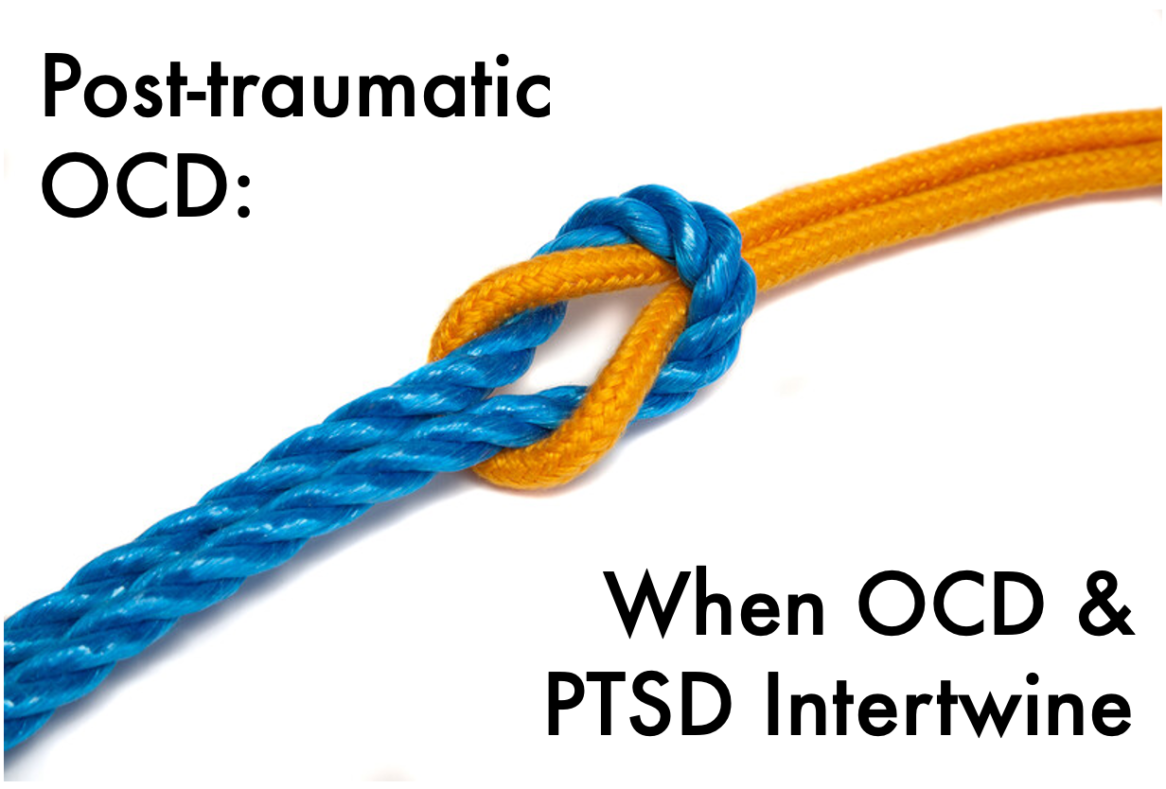
Mental health conditions are often misunderstood, and few are confused more frequently than Obsessive Compulsive Disorder (OCD) and Post-Traumatic Stress Disorder (PTSD). Whilst both can involve distressing thoughts, anxiety, and behaviours that affect everyday life, they are distinct conditions with different causes and treatment approaches.
Understanding these differences is important, not only for recognising symptoms but also for ensuring that people receive the right support. One treatment that has consistently been shown to be highly effective for both conditions is Cognitive Behavioural Therapy (CBT). However, the way CBT is used differs depending on whether someone is living with OCD or PTSD.
At First Glance: How Are OCD and PTSD Similar?
It is easy to see why people sometimes confuse OCD and PTSD. Both conditions can leave individuals feeling trapped in a cycle of anxiety and fear, and both can significantly affect work, relationships, sleep, and overall quality of life.
People with either condition may experience:
- Intrusive and distressing thoughts or memories.
- Heightened anxiety.
- Avoidance of situations that trigger distress.
- Difficulty concentrating.
- Feelings of shame or embarrassment.
- A strong desire to regain a sense of safety or control.
Despite these similarities, the reasons behind these experiences are very different.
The Key Difference: Where Do the Thoughts Come From?
Perhaps the biggest distinction between OCD and PTSD is the source of the intrusive thoughts.
Obsessive Compulsive Disorder (OCD)
With OCD, the intrusive thoughts are not usually based on something that has actually happened. Instead, they are unwanted “what if?” thoughts that trigger intense anxiety.
For example:
- What if I accidentally poisoned my family?
- What if I left the cooker on and my house burns down?
- What if I harm someone, even though I never want to?
These thoughts are known as obsessions. They are ego-dystonic, meaning they go against the person’s values, beliefs, and intentions. Someone with OCD does not want these thoughts—they find them frightening precisely because they are so inconsistent with who they are.
To reduce the anxiety, they may carry out compulsions, such as checking, washing, counting, repeating phrases, or seeking reassurance. Whilst these behaviours bring temporary relief, they reinforce the OCD cycle, making the obsessions more persistent over time.
Post-Traumatic Stress Disorder (PTSD)
PTSD develops after someone has experienced or witnessed a traumatic event.
Rather than worrying about something that might happen, people with PTSD are struggling with something that has already happened.
The brain has difficulty processing the traumatic experience, causing it to repeatedly intrude into everyday life through:
- Flashbacks.
- Nightmares.
- Intrusive memories.
- Strong emotional or physical reactions to reminders of the trauma.
Someone who has survived a serious road traffic collision, for example, may become extremely anxious every time they travel in a car because their brain continues to interpret driving as dangerous.
In PTSD, the intrusive experiences are linked to real memories. In OCD, the intrusive thoughts are typically fears about imagined possibilities.
Control vs Protection
Another useful way to understand the difference is to consider what the brain is trying to achieve.
In OCD, the brain is desperately trying to create certainty.
People often perform compulsions because they want to be absolutely sure that nothing bad will happen.
Examples include:
- Checking doors repeatedly to be certain they are locked.
- Washing hands excessively to be certain all germs are gone.
- Seeking reassurance to be certain they have not done something wrong.
The problem is that certainty is impossible, so the compulsions continue.
In PTSD, the brain is trying to provide protection.
After trauma, the brain becomes highly alert for signs of danger. This is why many people with PTSD experience:
- Hypervigilance.
- An exaggerated startle response.
- Avoidance of reminders.
- Difficulty relaxing.
- Sleep disturbances.
The brain believes it is helping by staying on guard, even when the danger has passed.
Why Avoidance Makes Both Conditions Worse
Although avoidance looks different in OCD and PTSD, it plays an important role in maintaining both conditions.
In OCD, avoidance might include:
- Avoiding public places due to contamination fears.
- Avoiding knives because of intrusive thoughts.
- Avoiding responsibility for fear of making mistakes.
In PTSD, avoidance often involves:
- Avoiding people connected to the trauma.
- Avoiding places where the event occurred.
- Avoiding conversations about the experience.
- Avoiding emotions linked to the traumatic memory.
Whilst avoidance reduces anxiety in the short term, it prevents the brain from learning that many situations are actually safe.
How CBT Helps Both Conditions
Cognitive Behavioural Therapy (CBT) is considered one of the most effective psychological treatments for both OCD and PTSD because it addresses the connection between thoughts, emotions, behaviours, and physical responses.
However, the goals of therapy differ depending on the condition.
CBT for OCD
With OCD, CBT focuses on breaking the cycle between obsessions and compulsions.
A specialist CBT therapist helps the individual understand:
- Why intrusive thoughts are normal and experienced by almost everyone.
- Why the meaning attached to those thoughts fuels anxiety.
- How compulsions keep OCD alive.
- How learning to tolerate uncertainty reduces anxiety over time.
One of the most effective CBT techniques for OCD is Exposure and Response Prevention (ERP).
ERP involves gradually facing situations that trigger obsessive fears whilst resisting the urge to perform compulsions.
For example:
- Touching a door handle without washing hands immediately afterwards.
- Leaving the house without repeatedly checking the front door.
- Allowing intrusive thoughts to be present without seeking reassurance.
Initially, anxiety may increase. However, as the brain learns that the feared outcome does not occur—and that anxiety naturally subsides—the need for compulsions begins to diminish.
In essence, CBT for OCD teaches the brain:
“I don’t need certainty to be safe.”
CBT for PTSD
CBT for PTSD has a different focus.
Rather than targeting compulsions, therapy helps the brain process traumatic memories that have become “stuck”.
The therapist works collaboratively with the individual to:
- Understand how trauma affects the brain and body.
- Process traumatic memories in a safe and structured way.
- Identify beliefs that may have developed after the trauma, such as “I’m never safe” or “The world is completely dangerous.”
- Reduce avoidance behaviours.
- Build confidence in everyday situations again.
As traumatic memories are processed, they become less emotionally overwhelming and begin to feel like memories from the past rather than experiences happening in the present.
The aim is not to forget what happened, but to reduce its power over everyday life.
In PTSD, CBT teaches the brain:
“The danger is over, and I can begin to feel safe again.”
Different Journeys, Shared Hope
Although OCD and PTSD arise from different experiences, both conditions can feel overwhelming and isolating.
Both involve a brain that is trying to protect the individual but doing so in ways that ultimately keep anxiety alive.
The encouraging news is that the brain is capable of change. Through CBT, people can learn new ways of responding to distress, reduce avoidance, challenge unhelpful thinking patterns, and gradually regain confidence in themselves and the world around them.
Recovery does not mean that difficult thoughts or memories never appear again. Rather, it means they no longer dictate daily life.
Final Thoughts
Whether someone is living with OCD or PTSD, early recognition and evidence-based treatment can make a significant difference. Although the conditions share certain features, understanding their differences helps ensure that treatment is tailored to the individual’s needs.
Cognitive Behavioural Therapy offers practical, structured, and evidence-based strategies that empower people to understand their experiences, break unhelpful cycles, and move towards recovery.
With the right support, both OCD and PTSD are treatable conditions, and many people go on to lead fulfilling, meaningful lives beyond their symptoms.
0 Comments