OCD and PTSD
Take Back Your Mind. CBT could help you manage intrusive thoughts, reduce triggers, and regain control after trauma or obsessive patterns

What would your life look like if you finally felt in control of your thoughts instead of overwhelmed by them — and are you ready to take the first step toward that change with a CBT consultation call?
If so, Click Below!
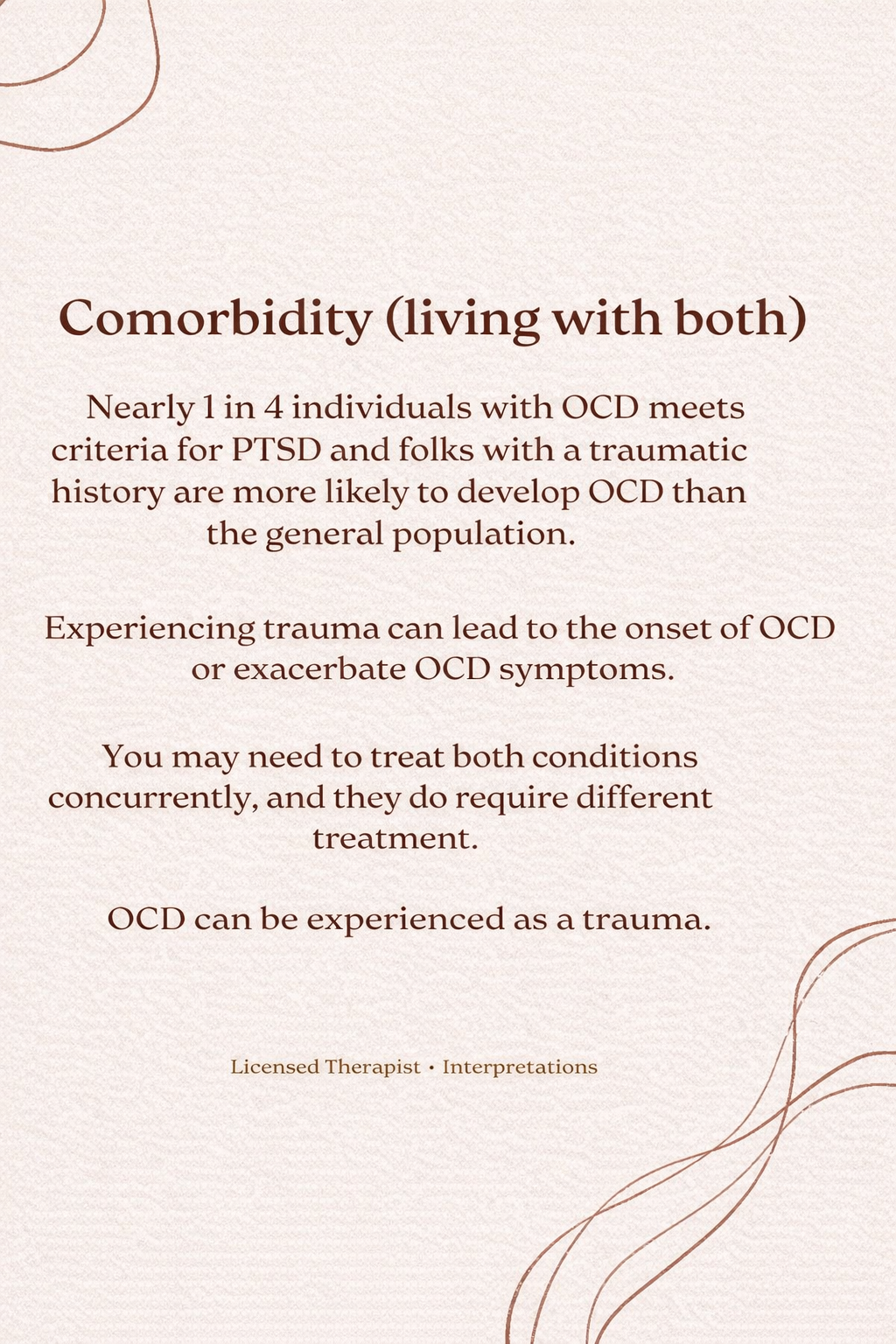
As a CBT therapist, there is something truly powerful and hopeful about helping people gently break the chains of OCD and PTSD. Through Cognitive Behavioural Therapy, we work together to understand how intrusive thoughts, fears, and past experiences can shape current behaviours and emotions. In a safe and supportive space, I help you gradually challenge the patterns that keep you feeling trapped, using proven techniques that build confidence, resilience, and self-trust. Over time, what once felt overwhelming can begin to lose its power, allowing space for calm, freedom, and healing. Watching someone reclaim their life from OCD or PTSD is a beautiful process—one where strength, courage, and hope slowly replace fear.
Obsessive-Compulsive Disorder (OCD) is a mental health condition characterized by recurrent, intrusive thoughts (obsessions) and repetitive behaviors or rituals (compulsions) performed to reduce anxiety. These obsessions and compulsions can feel overwhelming, time-consuming, and exhausting, often interfering with work, relationships, and daily routines. People with OCD may feel trapped in a cycle of worry and repetitive behavior that is difficult to control.
Post-Traumatic Stress Disorder (PTSD) develops after experiencing or witnessing a traumatic event. It can cause flashbacks, nightmares, heightened anxiety, and avoidance behaviors, making it difficult to feel safe or fully engage in everyday life. PTSD can affect your sleep, concentration, relationships, and ability to participate in activities you once enjoyed.
Both OCD and PTSD can have a profound impact on emotional well-being, social life, and overall quality of life. They can lead to feelings of isolation, frustration, and hopelessness if left unaddressed. Daily routines may be disrupted, productivity may suffer, and simple tasks can feel overwhelming.
The good news is that these conditions can be effectively managed with the right support. Cognitive Behavioral Therapy (CBT) provides structured, evidence-based strategies to help you understand your thoughts and behaviors, reduce distress, and gradually regain control over your life.
Creating a Newer Version of an Old You
Take Back Control over OCD and PTSD
-
Identify Triggers and Patterns
Work with a CBT therapist to pinpoint the thoughts, situations, or memories that trigger obsessions, compulsions, or trauma responses. Awareness is the first step toward change. -
Understand the Connection Between Thoughts, Feelings, and Behaviours
Learn how intrusive thoughts or traumatic memories influence emotions and behaviors, helping you see where change is possible. -
Challenge Unhelpful Thoughts
CBT teaches you to question obsessive or distressing thoughts, replacing them with more balanced and realistic perspectives. -
Gradual Exposure and Response Prevention (ERP)
For OCD, you’ll slowly face feared situations without performing compulsions, reducing anxiety over time. For PTSD, you’ll safely confront traumatic memories or triggers to lessen their emotional power. -
Develop Coping Strategies
Gain practical tools to manage anxiety, intrusive thoughts, flashbacks, and distressing emotions in daily life. Techniques may include grounding exercises, mindfulness, and relaxation methods. -
Practice Healthy Behaviors and Routines
Reintroduce meaningful activities and routines that support emotional stability and confidence. -
Build Long-Term Resilience
CBT equips you with lifelong skills to prevent relapse, handle triggers, and maintain control over your thoughts, emotions, and actions.
Christopher McQuaid
As a CBT therapist, I provide a safe, supportive space where your thoughts and feelings are respected, guiding you with expertise, empathy, and trust to help you understand patterns, build skills, and create meaningful, lasting change.
Stay In Touch
Office
Phone Number
+44 7359718803